
Greater Malé Connectivity Bridge property impact
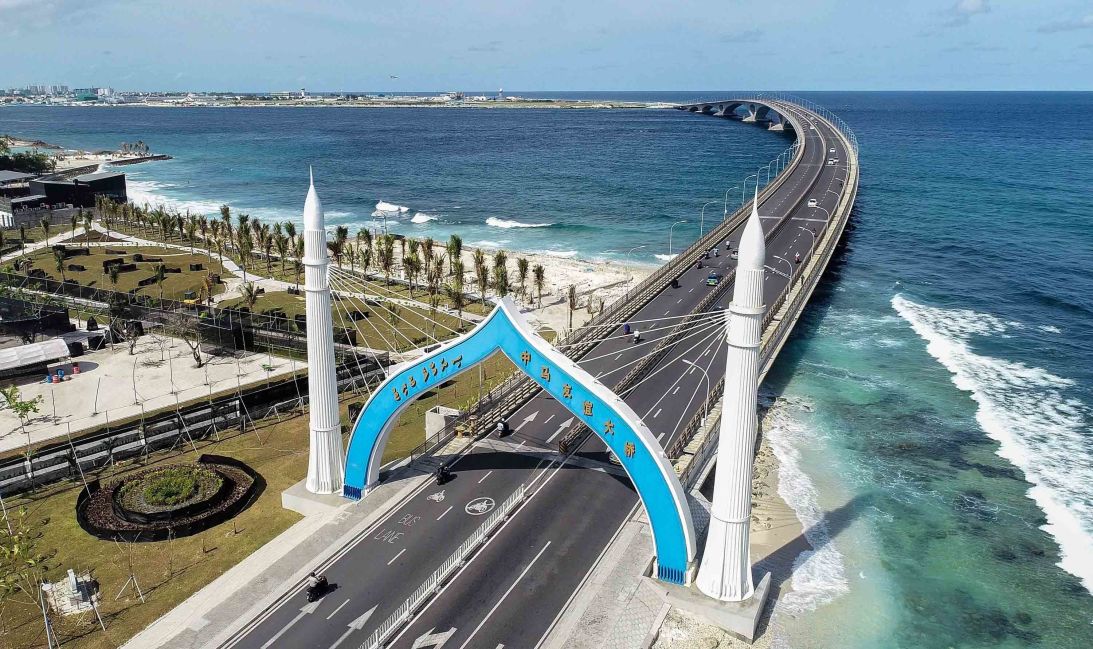
The “Bridge Effect”: How the Greater Malé Connectivity Project is Redefining Hulhumalé Real Estate in 2026
In the world of real estate, there is a phenomenon known as the “Infrastructure Premium.” It is the moment when a massive public works project transforms the geography of a city, turning distant suburbs into prime districts overnight. In the Maldives, this is known as the Bridge Effect. As we move through May 2026, the skyline of the Greater Malé region is being reshaped by the largest infrastructure project in the nation’s history: the Greater Malé Connectivity Project (GMCP).
For investors, the bridge is more than just steel and concrete; it is a catalyst for capital appreciation. To understand where property prices in Hulhumalé are going in the next 24 months, one must look at the impact of the Greater Malé Connectivity Bridge property impact. In this deep dive, we analyze how this $500 million investment is spiking property values and why 2026 represents the final “entry window” for high-yield returns.
What is the “Bridge Effect”? A Historical Perspective
To predict the future of Hulhumalé in 2026, we must first look at the past. When the Sinamalé Bridge (the China-Maldives Friendship Bridge) opened in 2018, it connected Malé to the airport and Hulhumalé. The impact was instantaneous. Within 12 months, rental prices in Hulhumalé Phase 1 surged by nearly 20%, and land values followed a similar trajectory.
Hulhumalé was no longer a “commuter island” that required a ferry ride; it became a direct extension of the capital. In 2026, we are seeing “The Bridge Effect 2.0.” The new Thilamalé Bridge (GMCP) is 6.7 kilometers long, connecting Malé to Villingili, Gulhifalhu, and Thilafushi. While it doesn’t touch Hulhumalé directly, it creates a “Mega-City” ecosystem. For the first time, Hulhumalé is positioned as the premium residential “East End” of a fully connected metropolitan area that spans four islands.
The Economic Ripple Effect on Hulhumalé Prices
Why does a bridge on the other side of Malé affect luxury apartments in Hulhumalé? The answer lies in “Integrated Demand.” As the Thilamalé Bridge nears full completion in late 2026, the industrial and commercial sectors are moving to Gulhifalhu and Thilafushi. This is creating thousands of high-level management jobs.
These professionals—both local and expat—do not want to live in industrial zones. They are looking for high-end residential living with parks, cafes, and schools. Hulhumalé is the only island in the chain that offers this. Consequently, we are seeing a “Migration of Wealth” toward Hulhumalé, driving up both rental yields and purchase prices. Investors who bought into projects like Aira or Solas are already seeing the benefits of this increased demand.
2. Infrastructure Spikes: 2026 Data Points
As of Q2 2026, the data from the HDC and private valuations shows a clear trend:
- Proximity Appreciation: Apartments within a 5-minute drive of the Sinamalé Bridge have seen a 15% increase in resale value in the last 18 months.
- Commercial Synergy: Retail spaces on the ground floors of luxury towers in Hulhumalé have seen a 12% rise in lease rates as logistics companies set up “satellite offices” to be near the bridge networks.
- The “Time-Cost” Value: The bridge has reduced the “logistical friction” of the Maldives. In 2026, a resident can move from a beachfront penthouse in Hulhumalé to a business meeting in the new commercial hub of Gulhifalhu in under 25 minutes.
3. The Greater Malé Connectivity Project (GMCP) as a Risk Mitigator
For international investors, infrastructure is the best insurance policy. A government that invests $500 million into a bridge system is a government committed to the long-term viability of the real estate market. This project ensures that Hulhumalé will remain the center of Maldivian life for the next century.
This level of investment also attracts international banks. In 2026, we are seeing more flexible financing options for foreigners because the “collateral” (the property) is now part of a highly connected, modern city. If you are exploring financing, ensure you understand the legal protections for foreign owners under the Strata Title Act.
4. Winner and Loser Islands: Why Hulhumalé Wins
In any major infrastructure shift, there are winners and losers.
- The Capital (Malé): While Malé remains the hub, its congestion is a detractor. In 2026, we are seeing a “Capital Flight,” where residents are selling old, cramped properties in Malé to buy modern luxury apartments in Hulhumalé.
- Villingili: This island is seeing a surge in interest as a “Green Suburb,” but it lacks the modern high-rise luxury infrastructure of Hulhumalé.
- Hulhumalé (The Winner): It is the only island that offers the “full package”—ocean views, smart city technology, wide roads, and direct bridge connectivity to both the airport and the new commercial hubs.
5. The “Last Window” Logic: Why Wait Until 2027?
Experienced real estate investors know the “Buy on Rumor, Sell on Fact” rule. In 2026, the “fact” of the bridge is already visible—the pylons are in the water, and the decks are being laid. However, the full price surge usually happens the day the ribbon is cut and the first car drives across.
By the time the Greater Malé Connectivity Project is fully operational in 2027, the “Infrastructure Premium” will already be priced in. Buying in 2026 allows investors to capture the final 10-15% “speculative jump” that occurs right before a project becomes functional. Our latest 2026 ROI Analysis suggests that those who enter the market now are positioned for the highest equity growth in the archipelago.
Strategic Investment Advice for 2026
To maximize the “Bridge Effect,” your investment strategy should focus on two specific types of property:
The “Executive Suite” Play
Focus on 1 and 2-bedroom apartments near the main arterial roads of Hulhumalé. These will be in high demand for corporate housing as the Thilamalé Bridge facilitates easier movement for consultants and engineers working on the new port and commercial districts.
The “Luxury Penthouse” Play
Beachfront properties in Hulhumalé Phase 2 will always be the “Trophy Assets.” As the bridge makes the Maldives more accessible to global “Ultra-High-Net-Worth” individuals, the demand for exclusive, beachfront luxury will outstrip supply. These units are less about rental yield and more about massive capital appreciation.
Conclusion: A New Era for the Maldives
The Greater Malé Connectivity Bridge property impact is not just about traffic; it is about the “Urbanization of Paradise.” The Maldives is no longer just a collection of isolated islands; it is becoming a connected, efficient, and modern metropolitan economy.
Hulhumalé sits at the very center of this evolution. With the Sinamalé Bridge already providing stability and the Thilamalé Bridge providing new growth, the real estate market in 2026 is on the verge of its most significant expansion yet. The question for investors is not whether the prices will rise, but whether they will be holding an asset when they do.
Don’t let the opportunity of the “Bridge Effect” pass you by. As we have seen with every major bridge project globally—from Hong Kong to Istanbul—the greatest gains are made by those who see the connection before it is finished.