
Maldives Real Estate Insights on Sustainable Development and Reclamation Projects
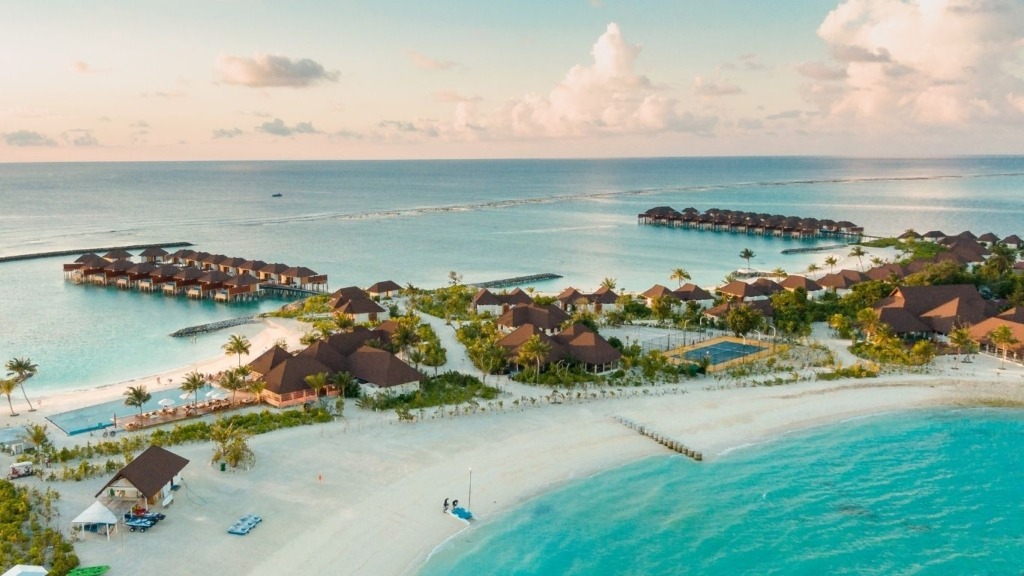
Future-Proofing Your Portfolio: Maldives Real Estate Insights on Sustainable Development and Reclamation Projects
As the global investment landscape shifts toward long-term sustainability and climate resilience, the Maldives finds itself at a unique crossroads. Once viewed solely through the lens of fragile beauty, the archipelago is now a laboratory for some of the world’s most ambitious engineering and “Green-Tech” real estate projects. For the forward-thinking investor, Maldives Real Estate Insights today must include a deep understanding of how the nation is literally rising above the challenges of the 21st century.
Future-proofing a portfolio in the Maldives means looking beyond the immediate aesthetic appeal of a property and examining the underlying technology, land reclamation strategies, and environmental safeguards that will preserve value for the next 50 to 100 years. In this final installment of our series, we explore how innovation is creating a new class of “climate-hardened” assets that offer both security and significant capital appreciation.
The New Land Paradigm: Reclamation and Artificial Islands
In a nation where 99% of the territory is water, land is the ultimate scarcity. However, the Maldives has turned this challenge into an opportunity through world-leading reclamation technology. One of the most significant Maldives Real Estate Insights for long-term investors is the success of projects like Hulhumalé.
Hulhumalé: The City of Hope
Hulhumalé, reclaimed from a lagoon near the capital of Malé, is the blueprint for future-proofed urban development. Unlike natural islands, Hulhumalé was engineered to sit higher above sea level, specifically designed to withstand projected sea-level rises. For real estate investors, this represents a “safe haven” asset.
Phase II of the Hulhumalé project is currently a hotbed for residential and commercial investment. With the development of smart-city infrastructure, high-rise luxury apartments, and dedicated international school zones, the real estate here is decoupled from the traditional “resort” cycle and behaves more like prime metropolitan real estate in Singapore or Dubai.
The Rise of “Elevated” Islands
Modern resort developers are also adopting these reclamation techniques. By creating “new” islands within lagoons, developers can control the height, shape, and coastal protection of the land from day one. These man-made islands are often more resilient than natural sandbanks, offering investors a more secure long-term leasehold prospect.
Sustainable Development as a Value Driver
In the modern market, sustainability is no longer an “optional extra”—it is a core component of asset valuation. Maldives Real Estate Insights show that properties with high ESG (Environmental, Social, and Governance) scores are attracting lower insurance premiums and higher demand from institutional buyers.
Renewable Energy Integration
Energy is one of the highest operational costs for Maldivian properties, traditionally relying on imported diesel. However, the new generation of real estate is “Solar-First.” Resorts like Soneva Jani and Kudadoo have proven that 100% solar-powered luxury is not only possible but highly profitable. When evaluating a real estate investment, the presence of integrated solar grids and battery storage systems is a key indicator of future “Net Operating Income” (NOI) stability.
Waste-to-Energy and Water Security
Future-proofed properties are closed-loop systems. Developments that feature on-site desalination plants and advanced waste-to-energy systems reduce their dependence on external supply chains. These Maldives Real Estate Insights are critical because, in a world of fluctuating commodity prices, an “off-grid” capable investment is a protected investment.
The Maldives Floating City: A Glimpse into the Future
Perhaps the most revolutionary development in the history of Maldives Real Estate Insights is the launch of the “Maldives Floating City” (MFC). In partnership with Dutch Docklands, the government is developing a floating urban area for thousands of residents in a lagoon just minutes from Malé.
For investors, this represents a paradigm shift. Floating real estate moves with the tide, theoretically making it immune to sea-level rise. The technology uses a system of floating platforms anchored to the seabed, creating a modular, expandable city. This is no longer science fiction; it is a tangible investment opportunity that is attracting global attention for its “zero-land-impact” philosophy.
Policy Future-Proofing: The “Golden Visa” and Legal Security
An investment is only as secure as the legal framework that protects it. The Maldivian government has recently introduced several policy shifts designed to provide long-term certainty to foreign investors. These Maldives Real Estate Insights are essential for those looking at a 10- to 20-year horizon.
The Residency-by-Investment Program
To encourage long-term capital commitment, the Maldives has introduced various tiers of residency for investors. By investing a certain threshold in Maldivian real estate or government-sanctioned projects, individuals can secure long-term residency rights. This “Golden Visa” style approach is transforming the Maldives from a “fly-in-fly-out” destination to a “second home” destination for the global elite.
Enhanced Lease Protections
Recent amendments to the Tourism Act have streamlined the process for lease extensions. Investors can now extend their island leases to 99 years with greater transparency and lower administrative hurdles. This extension of the “investment life” of a property significantly boosts the terminal value of the asset in an IRR (Internal Rate of Return) calculation.
Digital Infrastructure: The Remote-Work Catalyst
In the past, the Maldives was “digitally isolated.” Today, it is becoming a hub for the global digital nomad and the “high-net-worth remote worker.” This shift is a vital piece of Maldives Real Estate Insights for those looking at residential or mixed-use developments.
- Subsea Cables: Massive investment in high-speed fiber-optic subsea cables has brought Tier-1 internet connectivity to the middle of the Indian Ocean.
- Satellite Internet: The arrival of Starlink has ensured that even the most remote atolls now have 100Mbps+ speeds, making “work-from-the-villa” a reality.
This digital infrastructure future-proofs the occupancy of Maldivian real estate. We are seeing a new trend where villas are being rented for 3-6 months at a time by tech executives and traders, creating a “low-turnover, high-yield” rental model that didn’t exist five years ago.
Risk Management: Insurance and Engineering
No discussion of Maldives Real Estate Insights would be complete without addressing risk. Future-proofing your portfolio requires a “defense-first” mindset.
Advanced Coastal Engineering
When inspecting a potential investment, look at the sea walls and groynes. Modern Maldivian developments use “submerged breakwaters” that protect the beach from erosion while remaining invisible to guests. This type of high-end engineering preserves the beach—the island’s most valuable asset—and ensures the long-term viability of the resort.
Environmental Impact Assessments (EIA)
A rigorous EIA is the best friend of a smart investor. In the Maldives, the EIA process is exhaustive. Properties that have passed these tests with high marks are less likely to face “nature-based” litigation or sudden regulatory shutdowns. Buying into a project that respects the coral reef ecosystem is not just an ethical choice; it’s a strategy to avoid future “rehabilitation taxes” or fines.
The “Integrated Resort” Model: Diversification within a Single Asset
The final trend in our Maldives Real Estate Insights is the move toward “Integrated Tourism Developments.” Examples like CROSSROADS Maldives and the Fari Islands demonstrate the power of diversification.
These projects host multiple hotel brands, marinas, retail centers, and luxury residences on a single reclaimed footprint. For an investor, this mitigates risk. If one hotel brand underperforms, the marina or the retail hub continues to generate cash flow. This “ecosystem” approach to real estate is the ultimate way to future-proof a portfolio against shifts in traveler preferences.
Investment Checklist: How to Spot a Future-Proofed Maldivian Asset
Based on our Maldives Real Estate Insights, here is a quick checklist for your next acquisition:
- Elevation: Is the land/structure built above the 2.0-meter safety threshold?
- Energy: Does the property have a clear roadmap to 50%+ renewable energy?
- Connectivity: Is there dedicated fiber-optic or reliable satellite backup?
- Lease Term: Is there a clear path to a 99-year leasehold?
- Water/Waste: Is the property self-sufficient in its utility production?
The Resilience of the Blue Economy
The Maldives is often called the “canary in the coal mine” for climate change. However, our Maldives Real Estate Insights suggest a different narrative: one of incredible adaptation and resilience. Through world-class engineering, a shift toward renewable energy, and a progressive legal framework, the Maldives is positioning itself as a secure, long-term destination for global capital.
Future-proofing your portfolio in the Maldives isn’t about avoiding the water—it’s about understanding how to master it. As the world moves toward a “Blue Economy,” those who invest in the sustainable, reclaimed, and technologically advanced real estate of the Maldives will find themselves holding some of the most valuable assets of the mid-21st century.