
The Ultimate Ras Malé Guide
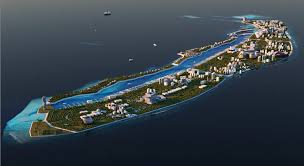
The Ultimate Ras Malé Guide: The Future of Maldives Real Estate and Investment
The Maldives is undergoing a historic transformation. While the world knows this archipelago for its turquoise lagoons and overwater bungalows, a new chapter is being written in the turquoise waters of the Fushidhiggaru Falhu lagoon. This chapter is Ras Malé—the most ambitious eco-city project in the history of the Indian Ocean.
For investors, expatriates, and developers, Ras Malé represents more than just land reclamation; it represents the birth of a sustainable metropolis that will redefine the Maldivian economy. In this comprehensive Ras Malé Guide, we explore the vision, the investment potential, and the strategic importance of this mega-development.
What is Ras Malé? The Vision of a Zero-Carbon City
Ras Malé is a massive land reclamation project located at the Fushidhiggaru Falhu lagoon, approximately 12 kilometers south of the capital, Malé. Spanning nearly 1,100 hectares, it is designed to be three times the size of Hulhumalé, which was previously the largest reclaimed island in the country.
The project is spearheaded by the Maldivian government with a clear mandate: to solve the housing crisis in the Greater Malé region while creating a world-class “Safe Island” that can withstand the challenges of rising sea levels. Unlike traditional developments, Ras Malé is being built with a Net-Zero Carbon philosophy, utilizing renewable energy and sustainable urban planning from the ground up.
A “Safe Island” Concept
Climate change is a primary concern for any Maldives investment. Ras Malé addresses this head-on. The island is being reclaimed at a height of 3 meters above sea level (and 2 meters at its edges), making it significantly more resilient to long-term sea-level rise compared to the natural islands of the Maldives. This makes it a “safe haven” for long-term capital and infrastructure.
The Scale of Development: Why It Matters for Investors
To understand the magnitude of the Ras Malé Guide, one must look at the numbers. While Hulhumalé Phase 1 and 2 provided a blueprint for urban living, Ras Malé expands that vision exponentially.
- Total Area: Over 1,100 Hectares of reclaimed land.
- Residential Capacity: Expected to house over 65,000 residents.
- Green Spaces: 20% of the city is dedicated to parks, forests, and recreational areas.
- Economic Zones: Dedicated sectors for finance, international trade, and luxury tourism.
For real estate investors, the scale means diversity. We aren’t just looking at social housing; we are looking at luxury waterfront villas, high-rise commercial towers, and boutique retail districts. The sheer volume of land creates a market that didn’t exist in the Maldives five years ago.
Ras Malé vs. Hulhumalé: A Comparison
Many investors ask, “Why should I look at Ras Malé if I am already invested in Hulhumalé?” While Hulhumalé is the current hub for expats and locals, Ras Malé is designed for the future. Here is how they compare:
| Feature | Hulhumalé | Ras Malé |
|---|---|---|
| Total Size | ~430 Hectares | ~1,100 Hectares |
| Energy Focus | Traditional Grid | Net-Zero / Renewable |
| Accessibility | Bridge to Malé/Airport | High-speed Ferry & Proposed Bridge |
| Sustainability | Retrofitted Urbanism | Eco-City by Design |
Investment Opportunities in Ras Malé
As of 2024, the project is in its primary reclamation phase, which is the most critical time for institutional and private investors to pay attention. Historically, the greatest ROI in Maldivian real estate has been captured by those who enter during the “ground-breaking” stages.
1. Luxury Residential Developments
The government plans to offer various tiers of residential plots. For the international market, the focus will be on luxury apartments and integrated resort-style living. These properties are expected to yield high rental returns, especially from the growing expat professional community in the Maldives.
2. Commercial and Office Space
With the decentralization of Malé, Ras Malé will become the new “CBD” (Central Business District). Tech firms, international banks, and logistics companies are already eyeing the commercial zones. Investing in commercial real estate here offers a hedge against the volatility of the tourism-only market.
3. The Tourism Expansion
Ras Malé will feature integrated tourism zones. This means luxury hotels and transit hubs that serve as a gateway to the southern atolls. This creates a unique “city-hotel” investment model that is currently scarce in the Maldives.
Foreign Ownership and Legal Framework
One of the most frequent questions in our Ras Malé Guide is: Can foreigners buy property?
Under current Maldivian law, foreign ownership is typically granted through long-term leases (up to 99 years). However, the government has been progressively opening the market to “Residency by Investment” programs. Purchasing a property in a designated “Special Economic Zone” like Ras Malé could potentially provide investors with long-term visas and ease of doing business.
Note: It is vital to work with a local real estate authority like Maldives Investments to navigate the specific legal requirements for Ras Malé as they are finalized.
The Connectivity Project: Bridging the Gap
Connectivity is the lifeblood of real estate value. Ras Malé is being designed with a “15-minute city” concept—where everything a resident needs is within a 15-minute walk or bike ride. But what about getting to the airport?
Current plans involve a fleet of high-speed, eco-friendly transport ferries. However, the long-term vision includes the potential extension of the Greater Malé Connectivity Project (GMCP). A bridge connection would link Ras Malé to the existing network of Malé, Villingili, Gulhifalhu, and Thilafushi, creating a seamless urban corridor.
Sustainability: The “Eco-City” USP
Sustainable investing is no longer a “nice to have”; it is a requirement for global capital. Ras Malé is setting a global benchmark. The city plans to utilize:
- Solar Power: Massive solar arrays to power residential districts.
- Waste-to-Energy: Integrated systems to minimize landfill reliance.
- Deep Sea Water Cooling: A revolutionary way to provide air conditioning with 80% less energy consumption.
Investors who prioritize ESG (Environmental, Social, and Governance) scores will find Ras Malé to be one of the most attractive developments in Asia.
Strategic Importance for the Maldives Economy
Why is the government pushing so hard for Ras Malé? The answer lies in economic diversification. By creating a second major urban center, the Maldives reduces its reliance on the “One Island, One Resort” model. Ras Malé will host financial services, maritime industries, and educational hubs, creating a more stable and resilient national economy.
How to Stay Ahead: A Step-by-Step for Investors
If you are looking to enter the Ras Malé market, follow these steps:
- Monitor Reclamation Progress: Value increases as land is finalized. Follow the Ministry of Construction and Infrastructure updates.
- Consult with Experts: Connect with us at Maldives Investments to receive alerts on plot auctions and apartment pre-sales.
- Understand the Tiers: Distinguish between social housing (often for locals) and “Investment Grade” properties aimed at the international market.
- Financial Planning: Ensure your capital is ready for the “Pre-Launch” phase, where the most significant capital appreciation occurs.
Conclusion: The Future is Ras Malé
Ras Malé is not just a housing project; it is the physical manifestation of the “Maldives of Tomorrow.” It offers a rare opportunity to invest in a brand-new city designed for the 22nd century. Whether you are looking for a luxury home, a commercial headquarters, or a high-yield rental property, Ras Malé is the destination to watch.
This Ras Malé Guide will be updated as new regulations and project phases are announced. Stay tuned to Maldives Investments for the latest developments in this groundbreaking project.
Frequently Asked Questions (FAQ)
When will Ras Malé be completed?
The reclamation phase is currently underway and is expected to be completed within 2024-2025. Infrastructure and initial residential construction will follow immediately after, with the first residents expected within the next 4-6 years.
Where is Ras Malé located?
It is located at Fushidhiggaru Falhu lagoon, south of the capital city Malé and the international airport. It is strategically positioned to become a central part of the Greater Malé Region.
Can foreigners buy land in Ras Malé?
While outright land ownership by foreigners is restricted under the Constitution, long-term leasehold structures (up to 99 years) are the standard for international investors, often combined with residency programs.
Is Ras Malé environmentally friendly?
Yes, it is designed to be a Net-Zero Carbon city. It includes massive green belts, solar energy initiatives, and sustainable waste management systems, making it a pioneer in tropical urbanism.