
Maldives vs. Dubai: Which is the Better Real Estate Investment for 2026?
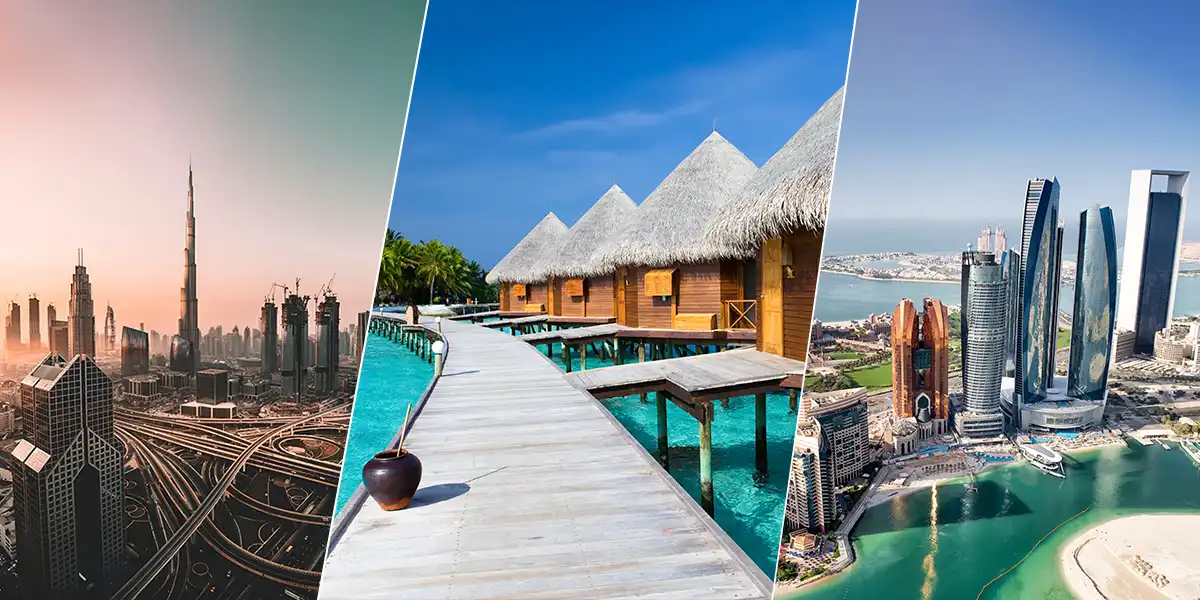
Maldives vs. Dubai: Which is the Better Real Estate Investment for 2026?
For the global real estate investor, the search for high-yield, tax-efficient markets often leads to one place: the Middle East. For years, Dubai has been the undisputed king of this segment. However, a new challenger is emerging in the Indian Ocean. The Maldives vs. Dubai debate is becoming increasingly relevant as the Maldivian government opens up its “integrated tourism” and “eco-city” projects to foreign capital.
Both markets offer luxury, tax-free environments and residency-by-investment programs. However, they serve very different investment philosophies. One is a mature, high-density urban jungle; the other is an emerging, scarcity-driven island paradise. In this 1,400-word deep dive, we compare Maldives vs. Dubai real estate to help you decide where to allocate your capital in 2025.
1. Market Maturity and Growth Potential
When comparing Maldives vs. Dubai, the first factor to consider is the stage of the market. Dubai is a “mature” market. It has undergone multiple cycles of boom and bust, and its infrastructure is largely complete. While this offers stability, the days of “overnight 100% appreciation” are largely in the past.
The Maldives, by contrast, is in its “Emerging Growth” phase. Projects like Ras Malé and the Greater Malé Connectivity Project are still in their infancy. For an investor, this represents a “ground floor” opportunity. Historically, those who invested in Dubai’s Palm Jumeirah during its reclamation phase saw the highest returns; the Maldives is currently at that exact stage of development.
2. Rental Yields: Cash Flow Comparison
For most investors, the primary goal is annual cash flow through rental yields. Here is how the two markets stack up:
| Metric | Dubai (Prime Areas) | Maldives (Hulhumalé/Ras Malé) |
|---|---|---|
| Avg. Net Rental Yield | 5% – 8% | 7% – 12% |
| Occupancy Rates | 75% – 85% | 80% – 90% (Tourism Driven) |
| Market Volatility | Moderate | Low (Supply is Physically Limited) |
In Dubai, the high supply of new apartments often puts downward pressure on rents. In the Maldives, the scarcity of land is a natural hedge against oversupply. There is only so much land that can be reclaimed, meaning rental demand in the Maldives almost always outstrips supply, leading to higher consistent yields.
3. Taxation and Ownership Structure
Both regions are famous for being tax havens, but the structures differ. Both have 0% Personal Income Tax on foreign earnings and 0% Capital Gains Tax. However, the ownership models are a key point in the Maldives vs. Dubai comparison.
- Dubai: Offers “Freehold” ownership in specific zones. This means you own the land and the structure forever.
- Maldives: Operates primarily on a “Leasehold” model (usually 99 years). While some investors prefer freehold, the 99-year lease is standard in high-value markets like London, Hong Kong, and Singapore, and offers the same practical security for three generations of a family.
4. Capital Appreciation: The “Scarcity” Factor
In real estate, value is driven by scarcity. Dubai has vast amounts of desert land that can be developed, which can lead to “supply shocks.” In the Maldives, every square meter of land is reclaimed from the ocean at a high cost. This physical limitation creates an “Elite Scarcity.”
As the Maldives transitions from a tourist-only economy to a business-and-residency hub, the demand for “Investment Grade” apartments in Hulhumalé is skyrocketing. Investors are seeing capital appreciation rates of 10-15% per annum in prime waterfront locations, outperforming many of the saturated districts in Dubai.
5. Residency and the Golden Visa
Both nations understand that real estate is a gateway to residency. The Dubai Golden Visa is world-famous, requiring an investment of roughly $545,000 for a 10-year visa. The Maldives Golden Visa (Pearl Residence) is more accessible, with a threshold often starting at $250,000.
For an investor seeking a “Plan B” residency, the Maldives offers a lower barrier to entry while providing a lifestyle that is arguably more exclusive. While Dubai offers a cosmopolitan “City Lifestyle,” the Maldives offers a “Bespoke Island Lifestyle” that is increasingly rare in the modern world.
6. Connectivity and Infrastructure
Dubai’s greatest strength is its airport, DXB, a global hub. However, the Maldives is catching up. The $800 million expansion of Velana International Airport will increase capacity to 7.5 million passengers per year. Additionally, the bridge network currently under construction will link the capital to the industrial and residential hubs, creating a “Greater Malé” metropolis similar in function (though not in scale) to the Dubai-Abu Dhabi corridor.
7. Risk Management: Environment and Geopolitics
Investors must look at the risks. In Dubai, the primary risk is geopolitical stability in the Middle East and the economic reliance on oil and global trade. In the Maldives, the primary risk is environmental (sea-level rise).
However, modern Maldivian projects like Ras Malé are being built at 3 meters above sea level—higher than many parts of Manhattan or London. The government is investing billions in “climate-proof” infrastructure, making the environmental risk a manageable factor for long-term investors.
8. The “Lifestyle” Dividend
Beyond the numbers, there is the “Lifestyle Dividend.” When you buy in Dubai, you are buying into a 24/7 urban environment—traffic, malls, and skyscrapers. When you buy in the Maldives, you are buying into the “Blue Economy.” The ability to step off your balcony and into a coral reef is a luxury that Dubai, despite its man-made islands, cannot truly replicate.
9. Comparison Table: At a Glance
| Feature | Dubai Real Estate | Maldives Real Estate |
|---|---|---|
| Entry Price (Luxury) | $500,000+ | $250,000+ |
| Property Tax | 0% | 0% |
| Primary Market Driver | Finance/Logistics | Luxury Tourism/Residency |
| Long-term Outlook | Steady/Mature | High-Growth/Emerging |
Conclusion: Where Should You Invest?
The answer to Maldives vs. Dubai depends on your goals. If you want a safe, established, high-density urban environment and have a larger capital base, Dubai is a fantastic choice. However, if you are looking for undervalued assets, higher rental yields, and the prestige of owning in the world’s premier island destination, the Maldives is the winner for 2025.
The Maldives is currently where Dubai was in the year 2000. Those who recognize the shift from “Vacation Spot” to “Investment Hub” now will be the ones who reap the greatest rewards over the next decade.
At Maldives Investments, we provide the on-the-ground expertise to help you navigate this emerging market. Whether you are looking for a pre-construction apartment in Ras Malé or a finished luxury villa in Hulhumalé, we ensure your investment is secure and high-yielding.
Frequently Asked Questions (FAQ)
Is property in the Maldives cheaper than Dubai?
Generally, yes. The entry point for a luxury waterfront apartment in the Maldives is often 30-40% lower than a similar property in Dubai’s Marina or Downtown districts, despite the Maldives having a much more limited supply.
Can I get a mortgage in the Maldives as a foreigner?
Mortgage options for foreigners are currently limited compared to Dubai. Most international buyers in the Maldives proceed with cash purchases or structured developer payment plans.
Which has better ROI?
Due to the tourism-driven nature of the economy, the Maldives often offers higher net rental yields (7-12%) compared to Dubai’s average of 5-8%.