
Guide to Finding Land for Sale in Maldives for Private Construction
A Foreigner’s Guide to Finding Land for Sale in Maldives for Private Construction
For the global real estate investor, few phrases carry as much weight—or as much mystery—as land for sale in Maldives. In a nation composed of 99% water, the remaining 1% of dry land is among the most coveted territory on the planet. As we navigate the economic landscape of July 2026, the demand for raw land has reached an all-time high, driven by the maturity of the “Pearl Residence” Golden Visa program and the opening of new reclamation frontiers like Ras Malé and Hulhumalé Phase 3.
However, buying land in Maldives as a foreigner is not a straightforward transaction. It requires a deep understanding of Maldivian Land Law, the nuances of leasehold vs. freehold, and the logistical realities of island-based construction. This guide serves as your definitive 2026 roadmap to securing land and architecting your private sanctuary in the Indian Ocean.
The Legal Landscape: Ownership vs. Leasehold in 2026
The first question every investor asks is: “Can a foreigner actually own land in the Maldives?” In July 2026, the answer is nuanced. While the Maldivian Constitution historically restricted land ownership to citizens, the 2024-2025 legislative reforms have created clear pathways for international stakeholders.
1. The 99-Year Leasehold
The most common method for securing land for sale in Maldives is through a long-term leasehold. Under current 2026 regulations, foreign individuals and corporations can secure leases for up to 99 years. These leases are legally robust, allowing the holder to build, renovate, and even sub-lease or sell the interest in the property. For all practical purposes, a 99-year lease functions similarly to freehold ownership in markets like London or Hong Kong.
2. Strata Title and Integrated Tourism Zones
In specifically designated “Integrated Tourism” zones, foreigners can own the “Strata Title” to the structures built on the land. While the land itself remains under a master lease, your ownership of the villa or apartment is permanent and registered independently in the National Land Registry.
3. Special Economic Zones (SEZ)
For ultra-high-net-worth investors making “Strategic Investments” (typically exceeding $50 million), the Special Economic Zones Law allows for even more flexible land arrangements, including potential freehold-equivalent status for the duration of the project’s life.
Top Locations for Land Acquisition in July 2026
Ras Malé: The Sovereign Eco-City
If you are looking for land for sale in Maldives with the highest appreciation potential, Ras Malé is the primary target. As the nation’s first “Smart City,” land plots here are being released in phases. The infrastructure in Ras Malé is designed for high-density luxury, with dedicated zones for residential villas that utilize deep-sea water cooling systems and solar grids.
Hulhumalé Phase 3: The Urban Expansion
While Phase 2 is now largely built out, July 2026 marks the first major release of residential plots in Phase 3. This area is specifically designed for “Creative Living,” with larger plot sizes than those found in Malé, allowing for private gardens and multi-generational homes. Land prices here have seen a 15% increase since the beginning of the year.
The Laamu Atoll: Road-Connected Land
For those who find Malé too crowded, the Laamu Atoll offers a unique proposition. Because the islands are connected by a 17km link road, land here offers a “mainland” feel with island aesthetics. It is one of the few places where you can buy land and reasonably expect to use a car or electric vehicle to move between your property and the airport.
Thulusdhoo and the “Surf Atolls”
Local island land remains the “gold mine” for boutique developers. Land on islands like Thulusdhoo is typically leased from local families or the island council. In 2026, these 50-to-99-year leases are the foundation of the Maldives’ booming boutique guesthouse industry.
2026 Land Prices: What to Expect
Price transparency has improved significantly in 2026 thanks to the new Maldives Real Estate Valuation Board. While prices vary by atoll, here are the current market averages for land for sale in Maldives:
| Location | Avg. Price (per sq. ft.) | Typical Plot Size |
|---|---|---|
| Hulhumalé Phase 3 | $1,200 – $1,800 | 2,000 – 4,000 sq. ft. |
| Ras Malé (Premium) | $2,000 – $3,500 | 3,000 – 6,000 sq. ft. |
| Thulusdhoo (Beachfront) | $500 – $900 | 5,000 – 10,000 sq. ft. |
| Addu City (Gan Area) | $200 – $450 | 10,000+ sq. ft. |
The Step-by-Step Acquisition Process
Buying land in a foreign jurisdiction requires a disciplined approach. In 2026, the process for a non-resident is as follows:
- Investment Approval: Apply for Foreign Investment Approval through the Ministry of Economic Development. This is usually streamlined if you are purchasing through a Maldivian-registered company.
- Title/Lease Verification: Conduct a “Clean Title Search” at the local council and the Ministry of Housing. This ensures the land is not subject to “Heirship Disputes”—a common issue on local islands.
- The Purchase & Sale Agreement (PSA): This must outline the lease duration, the permitted use (Residential vs. Commercial), and the “Construction Milestone” clauses.
- MIRA Registration: The transaction must be reported to the Maldives Inland Revenue Authority for the payment of the Land Transfer Tax (currently 5% for foreigners).
- Lease Registration: The final lease document is registered with the Land and Building Registry, providing you with a “Leasehold Certificate.”
The Real Challenge: Private Construction in an Archipelago
Once you have secured land for sale in Maldives, the real work begins. Building in the Maldives in 2026 presents unique logistical hurdles:
1. Logistics and Supply Chain
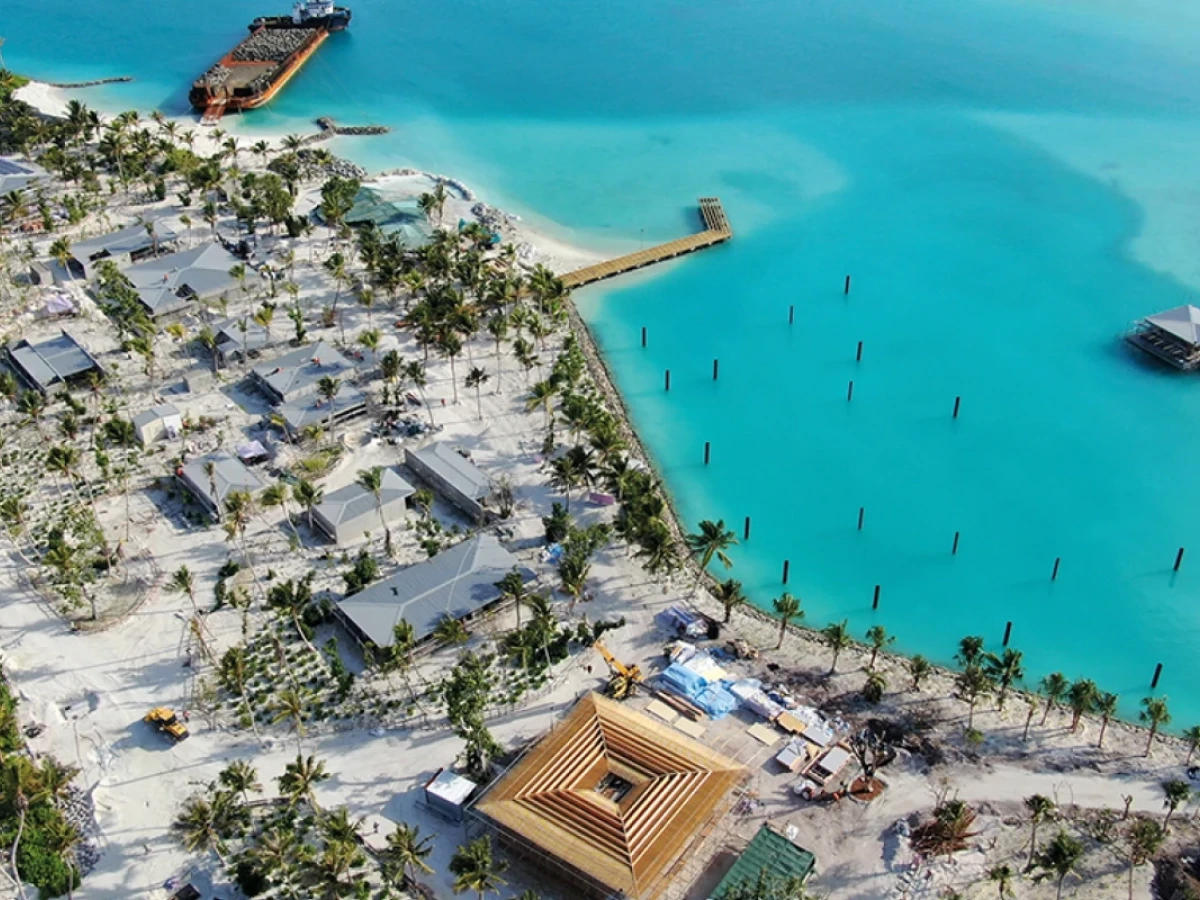
Almost all high-end construction materials—from Italian marble to German solar panels—must be imported. In 2026, the Thilafushi Industrial Zone has become a more efficient hub for logistics, but you must still account for “Barge Logistics.” Moving heavy materials from the port to a remote atoll can add 20-30% to your construction budget.
2. The EIA Requirement
The Maldives takes environmental protection seriously. Before breaking ground, you must conduct an Environmental Impact Assessment (EIA). This is especially critical if your construction involves beachfront modifications or the removal of mature palms. Failure to comply can result in massive fines and the revocation of your building permit.
3. Labor and Expertise
While there is an abundance of general labor, specialized “Green Building” expertise is in high demand in 2026. Hiring a project manager who understands the Maldivian climate—specifically the impact of salt-spray and humidity on electronics and structural integrity—is the most important investment you will make.
Building for the Future: ESG and Climate Resilience
In July 2026, building a “standard” house is no longer enough. To maintain the resale value of your Maldives land investment, your construction must be “Climate Ready.” This includes:
- Elevated Foundations: Designing for long-term sea-level projections.
- Renewable Integration: Utilizing solar-glass and vertical wind turbines.
- Self-Sustaining Water: Private desalination and atmospheric water generation systems.
The Golden Visa Connection
One of the primary drivers for buying land in Maldives in 2026 is the Pearl Residence. Investors who spend a minimum of $500,000 on land and construction are eligible for this 10-to-20-year residency visa. This has made the Maldives a top destination for “Plan B” residency for European and Asian investors seeking a tax-neutral, secure, and beautiful home base.
Conclusion: Is Land the Ultimate Maldivian Asset?
The search for land for sale in Maldives is a pursuit of the ultimate finite asset. As the nation continues to expand its physical footprint through reclamation and its economic footprint through the Blue Economy, land remains the “anchor” of any sophisticated portfolio.
While the process of buying and building in the Maldives is more complex than in a continental market, the rewards—both financial and personal—are incomparable. In July 2026, with a clear legal framework, a booming tourism sector, and a government committed to sustainable growth, there has never been a more validated time to secure your piece of paradise.
Navigating the land market requires local expertise. At Maldives Investments, we specialize in identifying off-market land plots and managing the legal complexities of foreign leaseholds. Contact our July 2026 Land Desk for a curated list of available plots and a consultation with our construction partners.