
Maldives Personal Income Tax and 2026 Wealth Reporting
Maldives Personal Income Tax and 2026 Wealth Reporting: What Foreign Residents Need to Know
As we move through mid-2026, the global hunt for “fiscal sanity” has reached a fever pitch. With traditional wealth hubs in Europe and North America introducing aggressive new wealth taxes and “unrealized gain” levies, the international investor class is looking for jurisdictions that offer both stability and tax efficiency. Enter the Maldives. Once known only for its turquoise lagoons, in 2026, the archipelago is recognized as one of the most sophisticated, low-tax residential hubs in the “Blue Economy.”
However, “low tax” does not mean “no rules.” In the era of the OECD’s Common Reporting Standard (CRS) and increased global transparency, navigating Maldives tax for foreign residents requires a clear understanding of local statutes and international reporting obligations. This 1,400-word guide provides a comprehensive overview of the 2026 fiscal environment for expatriates, property owners, and Pearl Residence holders.
The “Tax Haven” Myth vs. the 2026 Reality
First, it is vital to dispel the myth that the Maldives is an unregulated tax haven. Since 2020, the Maldives has modernized its tax system to align with international standards, ensuring it remains off any “Blacklists” while maintaining a highly competitive edge. In 2026, the Maldives is classified as a “Territorial Tax System.”
This means that, generally, you are only taxed on income that is sourced within the Maldives. For a foreign resident whose wealth is generated from global stocks, international businesses, or remote consulting, this creates a massive opportunity for legal tax optimization. In 2026, the Maldives remains one of the few jurisdictions where you can enjoy a 5-star lifestyle without the “lifestyle tax” found in Dubai or the high “stamp duties” of Singapore.
Personal Income Tax (PIT) in 2026: Thresholds and Exemptions
The Maldives introduced Personal Income Tax in 2020, and as of 2026, the system is well-established but remains remarkably lenient for foreign residents compared to global averages.
1. Tax Residency Status
Under the 2026 tax code, you are considered a Tax Resident if you spend more than 183 days in the Maldives during a calendar year. As a resident, you are subject to Maldivian tax on your worldwide income. However, there is a critical “Foreign Source” exemption for non-citizens holding specific investor visas like the Pearl Residence, which we will detail below.
2. Current Tax Brackets (2026 Estimates)
For income generated within the Maldives (such as local rental income or a local salary), the brackets are progressive:
- 0 – MVR 720,000 ($46,700 USD approx): 0% Tax
- MVR 720,000 – MVR 1.2M: 5.5%
- MVR 1.2M – MVR 2M: 10%
- Over MVR 2M: 15% (The Top Cap)
Compare this 15% top cap to the 40-50% seen in the UK, Germany, or Japan, and the “Maldives Dividend” becomes clear.
The Pearl Residence “Fiscal Shield”
The Pearl Residence (Golden Visa) is not just a residency permit; in 2026, it is a strategic tax tool. Under the Foreign Investment Incentive Act of 2025, holders of the Pearl Residence are granted a 10-year exemption on the reporting of foreign-sourced passive income.
If you live in Hulhumalé and receive dividends from a US-listed company or rental income from a London flat, the Maldives does not tax that income, provided it is not remitted into a Maldivian business entity. This makes the Maldives an ideal “Base of Operations” for digital entrepreneurs and retired HNWIs who want a high quality of life without the domestic tax drag on their global portfolios.
Property Tax: The “Hidden” Saving
One of the most significant advantages of Maldives tax for foreign residents is the complete absence of a traditional annual Property Tax.
In Florida, a $2 million villa might cost you $40,000 a year in property taxes. In the Maldives, once you pay the initial Tourism Goods and Services Tax (TGST) on your leasehold acquisition, your annual “holding cost” to the government is virtually zero. There is no annual “Land Tax” for foreign leaseholders. This drastically increases your “Net Yield” and makes the Maldives a superior market for capital preservation.
Double Taxation Avoidance Agreements (DTAA)
As of 2026, the Maldives has significantly expanded its network of Double Taxation Avoidance Agreements. These treaties ensure that you are not taxed twice on the same income by two different countries. The Maldives currently has active DTAAs with major hubs including India, the UAE, and several EU nations. This legal protection is essential for investors who want to ensure their Maldives investments are recognized as “tax-paid” in their home jurisdictions.
Wealth Reporting and Global Compliance (CRS & FATCA)
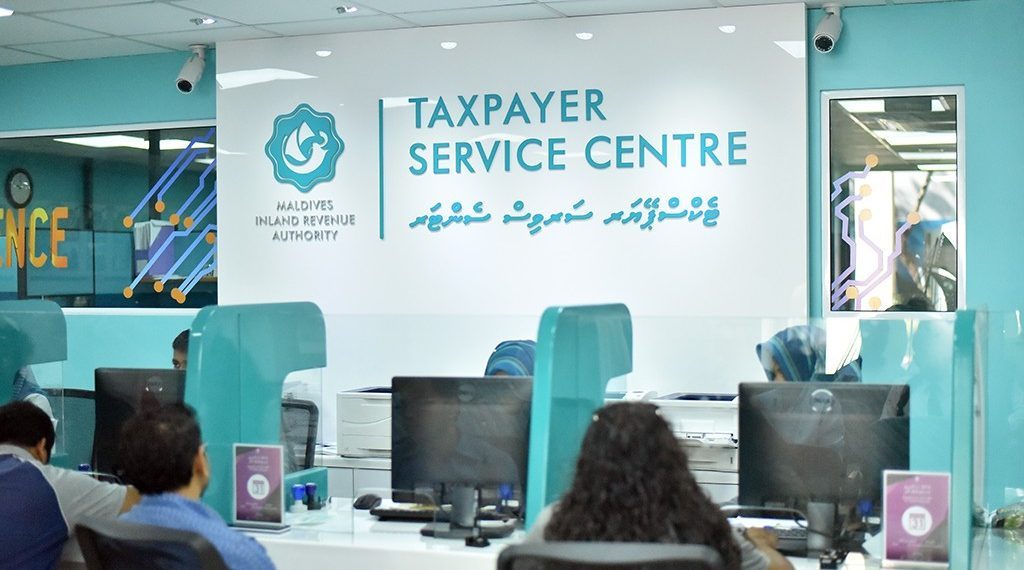
Transparency is the price of entry for a stable financial system in 2026. The Maldives is a signatory to the Common Reporting Standard (CRS). This means the Maldives Inland Revenue Authority (MIRA) automatically exchanges financial account information with the tax authorities of other participating countries.
What this means for you:
- Bank Accounts: If you open a bank account at the Bank of Maldives (BML) or BML Islamic, the balance and interest earned will be reported to your home country’s tax office.
- Transparency is Safety: Because the Maldives is compliant with these rules, your money is “clean” and “moveable.” Non-compliant jurisdictions are increasingly being cut off from the global banking system (SWIFT), making the Maldives a safer place to hold assets.
- FATCA: For US Citizens, Maldivian banks are fully FATCA-compliant, ensuring that your reporting requirements to the IRS are handled smoothly.
Business Tax for Boutique Operators
If you are an expat who has chosen to open a boutique guesthouse in the Maldives, you will be subject to Business Profit Tax (BPT). In 2026, the BPT stands at a flat 15% for profits exceeding MVR 500,000. For small boutique operators, this is highly competitive. Furthermore, “Green” businesses (those using solar and sustainable waste management) are eligible for Tax Credits that can reduce their effective tax rate to as low as 10%.
Strategic Advice: Structuring Your 2026 Move
To maximize the benefits of Maldives tax for foreign residents, we recommend the following 2026 strategy:
- Acquire the Pearl Residence: This is your “Base Layer” of protection for foreign income.
- Use a Local SPV: If you are buying multiple properties, holding them through a Maldivian Special Purpose Vehicle (SPV) can offer better “Expense Offsetting” for your BPT.
- Coordinate with a Cross-Border Expert: Ensure your “Exit” from your current high-tax country is legally documented. The Maldives is a great place to *be*, but you must first legally *leave* your previous tax net.
The Fiscal Sanctuary of the Indian Ocean
The Maldives in 2026 offers a rare and powerful combination: the beauty of a tropical paradise with the fiscal logic of a modern financial center. By maintaining a territorial tax system and offering robust residency incentives like the Pearl Residence, the Maldives has successfully positioned itself as the premier sanctuary for the “Conscious Capitalist.”
Whether you are looking to protect your retirement savings from inflation and high taxes, or you are an entrepreneur looking for a low-friction environment to grow your digital empire, the Maldivian tax code is designed to support your growth. In 2026, the Maldives isn’t just a place to spend your money—it’s the best place to keep it.