
Maldives vs. Seychelles
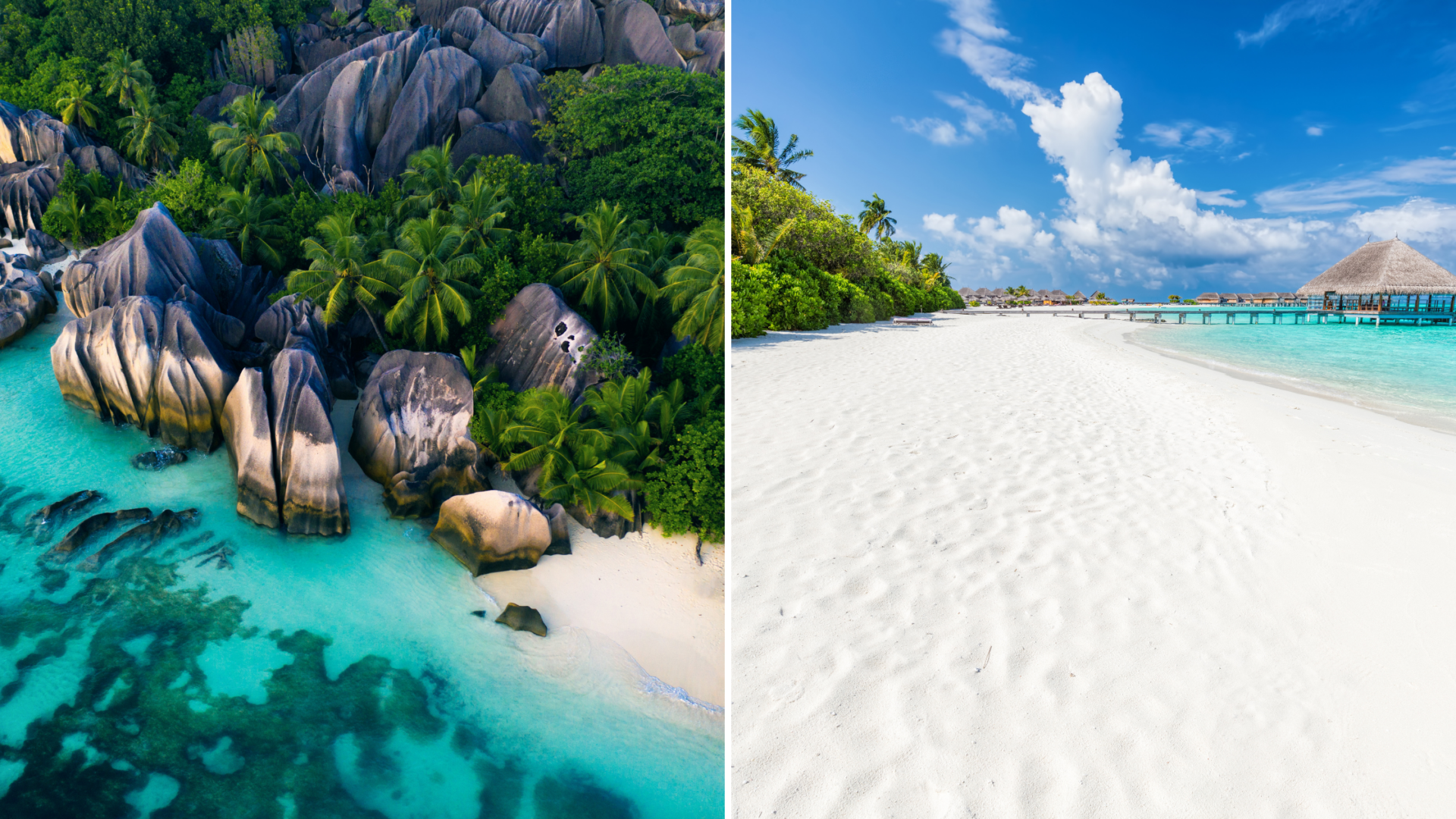
Maldives vs. Seychelles: Which Archipelago Offers Better Property Protection in 2026?
For the elite global investor, the Indian Ocean has long been the ultimate frontier for luxury real estate. However, choosing between the two titans of the region—the Maldives and the Seychelles—has become increasingly complex. As we reach mid-2026, both nations have overhauled their foreign ownership laws to attract “Blue Economy” capital.
While the Seychelles has traditionally been seen as the “stable, freehold” option, the Maldives has surged forward with massive infrastructure projects and the revolutionary Pearl Residence program. This 1,400-word deep dive into Maldives vs Seychelles real estate will analyze legal protections, residency benefits, and capital growth potential to determine where you should plant your flag in 2026.
1. The Legal Framework: Leasehold vs. Freehold in 2026
Historically, the biggest differentiator was the type of ownership. The Seychelles allows for freehold ownership in designated “Special Economic Zones” (like Eden Island), while the Maldives operates primarily on a 99-year leasehold system for foreign investors.
However, in 2026, the gap has narrowed. The Maldives’ Foreign Direct Investment (FDI) Act now provides ironclad protections for leaseholders that are virtually indistinguishable from freehold rights in practice. These leases are fully transferable, bankable, and can be extended. In contrast, the Seychelles has recently introduced stricter “Gainful Occupation Permits” (GOP) and land-holding taxes for foreigners, which has added a layer of bureaucratic friction that didn’t exist five years ago.
Maldives Protection:
In the Maldives, the 2026 legal framework ensures that even if a resort changes management, the private villa owner’s lease remains protected under the Ministry of Tourism’s master lease. This “double-layered” protection is a significant draw for UHNWIs (Ultra-High-Net-Worth Individuals).
2. Residency and “Golden Visas”: The Pearl Residence Advantage
When comparing Maldives vs Seychelles real estate, the residency permit is often the deciding factor. Investors don’t just want a house; they want a “Plan B” residency.
- The Seychelles: Offers residency to those who invest $1 million or more. However, the process is often described as opaque, and the residency does not automatically lead to a permanent stay or ease of doing business.
- The Maldives (2026): The Pearl Residence program has become the gold standard in the Indian Ocean. With an investment starting at $1 million (or $500,000 for the retirement tier), investors receive a 10-year, renewable residency. Most importantly, the 2026 version of this visa includes “Corporate Rights,” allowing the holder to open local bank accounts and operate businesses with far less red tape than in the Seychelles.
3. Infrastructure and Connectivity: The Greater Malé Boom
One of the most striking differences in 2026 is the sheer scale of urban development. The Seychelles has maintained a “boutique” feel, with very little new infrastructure in Mahé or Praslin. While this preserves natural beauty, it limits the growth of property values.
The Maldives, conversely, is in the middle of a historic transformation. The completion of the Thilamalé Bridge and the expansion of Velana International Airport (now capable of handling 7 million passengers annually) has fundamentally changed the “Return on Investment” (ROI) calculation. Property in Hulhumalé and the new eco-city of Ras Malé is benefiting from “Infrastructure-led Appreciation,” a trend that the more stagnant Seychelles market cannot match.
4. Environmental Adaptation and “Sea Level” Security
A common concern for Indian Ocean investors is climate change. Critics often point to the Seychelles’ granitic (high-altitude) islands as being safer than the low-lying coral atolls of the Maldives.
However, the 2026 data shows that the Maldives has taken a more proactive technological approach to this challenge. Projects like the Maldives Floating City and the massive land reclamation at Ras Malé (built at a safe elevation of 3 meters above sea level) have mitigated these risks through world-class Dutch engineering. In the Seychelles, the lack of new “climate-proofed” land has led to a scarcity of modern, resilient inventory.
5. ROI and Rental Yields: Hospitality-Linked Gains
If you are looking for income, the Maldives vs Seychelles real estate debate usually tilts toward the Maldives. The Maldivian “One Island, One Resort” model is the most profitable hospitality engine in the world.
In 2026, branded residences in the Maldives (such as Soneva, Four Seasons, and the new 2026 arrivals like Aman) are offering guaranteed rental yields of 7-9%. The Seychelles hospitality market, while luxury-focused, tends to have lower occupancy rates and higher operational costs due to labor shortages, resulting in average yields of only 4-5%.
6. Accessibility and Ease of Travel
Accessibility is the lifeblood of luxury property value. In 2026, the Maldives is significantly better connected to the world’s wealth hubs. With direct “Private Jet” terminals and 24/7 seaplane operations, reaching your villa in the Maldives is a seamless experience.
The Seychelles, while beautiful, remains more isolated. Flight frequencies from Europe and Asia are lower, and domestic travel between islands is largely dependent on a limited ferry and domestic flight schedule, which can be frustrating for the high-paced modern investor.
7. Taxation: Where Do You Keep More?
Both nations are relatively tax-friendly, but there are nuances.
- Seychelles: Imposes a “Stamp Duty” on property transfers and a “Foreigner’s Land Holding Tax.”
- Maldives: Does not have a traditional property tax. Instead, investors pay a one-time “TGST” (Tourism Goods and Services Tax) on the purchase of resort villas. For residential apartments in Hulhumalé, the tax burden is remarkably low, and there is no Capital Gains Tax on the resale of property by individuals in 2026.
8. The “Lifestyle” Factor: Pristine Isolation vs. Integrated Luxury
Finally, we must consider the lifestyle. The Seychelles offers a “rugged” luxury experience—hiking through jungles and visiting secluded coves. It is a destination for the “explorer.”
The Maldives in 2026 offers an “integrated” luxury experience. You have access to the world’s best underwater restaurants, overwater spas, and “Smart City” amenities in Hulhumalé. For the investor who wants a remote island feel but also wants high-speed fiber internet and a world-class gym nearby, the Maldives is the clear winner.
Comparison Summary Table (2026 Data)
| Feature | Maldives (2026) | Seychelles (2026) |
|---|---|---|
| Ownership Type | 99-Year Leasehold (Protected) | Freehold & Leasehold |
| Golden Visa | Pearl Residence (10 Years) | Residency by Investment |
| Avg. Rental Yield | 7% – 10% | 4% – 5% |
| Capital Gains Tax | 0% (for individuals) | Variable |
| Connectivity | World-Class (High Frequency) | Moderate (Lower Frequency) |
Conclusion: Why the Maldives Wins in 2026
While the Seychelles will always have a place in the hearts of nature lovers, the 2026 investor is looking for liquidity, residency, and modern infrastructure. The Maldives has evolved from a simple tourism destination into a sophisticated financial and residential hub.
With the Pearl Residence providing long-term security and projects like Ras Malé proving the nation’s commitment to the future, the Maldives is currently the superior choice for Indian Ocean property investment. The “Risk vs. Reward” profile of the Maldives in 2026 is simply unmatched by its regional neighbors.
Secure Your Indian Ocean Assets
Deciding between the Maldives and the Seychelles is a high-stakes move. Let our consultants show you the 2026 audit reports for the top-performing Maldives investments and help you navigate the Pearl Residence application process today.