
Maldives Real Estate Insights into the Luxury Resort and Guest House Markets
The High-Yield Horizon: Maldives Real Estate Insights into the Luxury Resort and Guest House Markets
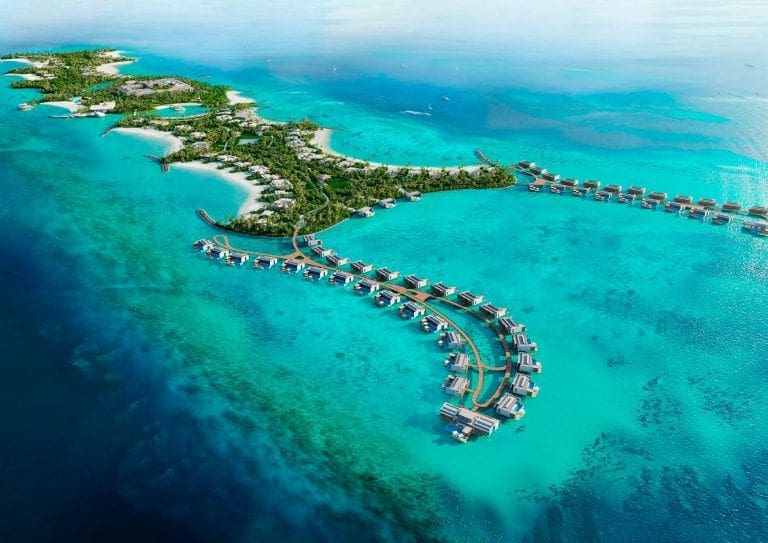
The Maldives has long been the playground of the global elite, but behind the curtain of crystal-clear waters and white sands lies one of the most resilient and high-yielding investment environments in the world. For investors looking for more than just a lifestyle asset, the archipelago offers a unique financial ecosystem. In this second installment of our deep-dive series, we provide critical Maldives Real Estate Insights into the two primary pillars of the market: the legendary “One Island, One Resort” model and the rapidly expanding local island guest house sector.
Understanding where the yield comes from is the difference between a vanity project and a high-performance portfolio addition. As the global tourism landscape shifts toward experiential travel, the Maldives is perfectly positioned to capture both the ultra-wealthy and the affluent mid-market, creating a bifurcated investment opportunity that is unique to this region.
The Resilience of Maldivian Tourism Yields
Before examining specific property types, it is essential to look at the macro-economic data that supports Maldives Real Estate Insights. Unlike many tropical destinations that suffer from extreme seasonality or political instability, the Maldives has maintained a consistent upward trajectory in tourism arrivals. Even in the face of global economic headwinds, the “isolation by design” of the Maldivian geography acts as a natural buffer, ensuring that the luxury segment remains largely recession-proof.
The Average Daily Rate (ADR) in the Maldives is among the highest globally, frequently exceeding $1,500 USD for luxury villas and $500 USD for premium local island boutique hotels. For an investor, these figures represent the foundation of a high-yield horizon that is difficult to replicate in markets like the Caribbean or Southeast Asia.
Segment 1: The “One Island, One Resort” Model
The “One Island, One Resort” concept is the bedrock of the Maldivian economy. From an investment perspective, this model offers a level of exclusivity and control that is virtually non-existent elsewhere. Here, the entire island is leased from the government, and the developer has total sovereignty over the guest experience.
Luxury Villa Sales and Strata-Title Opportunities
A significant trend in Maldives Real Estate Insights is the shift toward branded residential components within these resorts. Top-tier brands like Soneva, Ritz-Carlton, and Four Seasons have pioneered the sale of private villas to individual investors.
When you invest in a resort villa, you are typically entering into a leasehold agreement for the duration of the resort’s master lease (often up to 99 years). These assets are managed by the resort operator, meaning the investor enjoys a “hands-off” experience. The revenue-sharing models usually range from 30% to 50% of the net room rate, providing a consistent income stream while the owner retains the right to use the villa for several weeks each year.
Capital Appreciation in the Resort Sector
Because land is finite in the Maldives, the value of the leasehold itself appreciates significantly over time. As an island becomes fully developed and operational, the “blue sky” value of the business combined with the tangible asset value of the villas creates a dual-layered appreciation. Historically, resort assets in the Maldives have seen capital gains that outperform traditional European real estate by a factor of two or three over a ten-year cycle.
Segment 2: The Guest House Revolution on Local Islands
While the resorts capture the headlines, the most explosive growth in the last decade has occurred on inhabited local islands. Since the government legalized guest houses in 2010, the “Local Island” sector has democratized Maldives Real Estate Insights, opening the door for mid-market investors.
The Rise of Boutique Hotels
Islands like Maafushi, Thulusdhoo, and Dharavandhoo have transformed into vibrant hubs. These are not “backpacker hostels” but sophisticated boutique hotels that offer a “Maldives Lite” experience at a more accessible price point. For an investor, the entry cost for a 20-room boutique hotel on a local island is a fraction of a resort investment, yet the occupancy rates often exceed those of the ultra-luxury resorts.
Maldives Real Estate Insights show that guest houses on popular islands often maintain occupancy rates of 80-90% year-round. The return on cost for these developments can be incredibly rapid, with many investors recouping their initial capital within 5 to 7 years.
Joint Ventures and Local Partnerships
Under current regulations, foreign investors looking to develop on local islands often enter into Joint Venture (JV) agreements with Maldivian landholders. This structure provides a layer of local expertise and eases the process of navigating island council regulations. For the savvy investor, this is an opportunity to build a scalable brand across multiple atolls.
ROI Analysis: Comparing the Two Models
To provide actionable Maldives Real Estate Insights, we must look at the comparative Return on Investment (ROI). While the luxury resort sector offers higher prestige and larger absolute dollar returns, the guest house sector often offers a higher percentage return on initial capital.
- Luxury Resort Villa: 4-7% Net Yield + High Capital Appreciation + Lifestyle Benefits.
- Local Island Boutique Hotel: 10-15% Net Yield + Rapid Payback Period + Operational Involvement.
The choice depends on the investor’s risk appetite and liquidity requirements. Institutional investors typically gravitate toward the resort sector for its scale and brand security, while private equity and individual entrepreneurs are finding massive success in the boutique local island market.
The Impact of Infrastructure on Yield
You cannot discuss Maldives Real Estate Insights without mentioning infrastructure. The government’s investment in domestic airports is the single biggest driver of property value. When a new domestic airport is announced in a remote atoll, the surrounding islands see an immediate spike in land lease values.
The “Greater Malé” connectivity project—including the Sinamalé Bridge and the expansion of the Velana International Airport—has fundamentally changed the ROI calculations for the Malé, Kaafu, and Vaavu atolls. Reduced transfer times for guests directly translate to higher ADRs and lower operational costs for the property owner.
Operational Insights: Managing Your Investment
Investment in the Maldives is rarely a “DIY” endeavor. Success depends on the quality of your operator. For those purchasing villas, the resort’s management team handles everything from marketing to maintenance. For guest house investors, hiring a reputable local management company is essential.
One of the most valuable Maldives Real Estate Insights we can offer is the importance of the “Guest Experience Score.” In the Maldives, digital reputation is currency. A property with a 9.0+ rating on Booking.com or TripAdvisor can command a 20% premium in pricing over a similar property with lower scores. Therefore, the “yield” is as much about hospitality management as it is about the physical real estate.
Navigating Taxes and Profit Repatriation
The Maldives is an investor-friendly jurisdiction, but it is not a “tax-free” haven. Understanding the fiscal landscape is a key part of Maldives Real Estate Insights:
- Tourism Goods and Services Tax (T-GST): Currently at 16%, this is paid by the guest but must be managed by the property.
- Green Tax: A per-head, per-night tax that supports environmental initiatives.
- Corporate Income Tax: The Maldives has a standard corporate tax rate (currently 15%), but various incentives exist for large-scale investments.
- Repatriation: Foreign investors have the legal right to repatriate profits in foreign currency, provided they have met their local tax obligations.
Future Trends: What’s Next for the High-Yield Horizon?
As we look forward, several emerging trends are shaping the next generation of Maldives Real Estate Insights:
1. Wellness-Centric Real Estate
Post-pandemic travel has seen a massive shift toward wellness. Properties that incorporate dedicated medical-wellness facilities, organic farming, and “bio-hacking” amenities are seeing a 30% higher ADR than traditional luxury resorts.
2. The Digital Nomad and Long-Stay Investor
The “Work from Anywhere” trend has reached the Maldives. We are seeing a demand for villas equipped with high-speed satellite internet (Starlink is now active in the Maldives) and office facilities, allowing for 3-6 month stays. This shifts the yield model from “transient tourism” to “residential leasing.”
3. Sustainability as a Value Driver
In the Maldives, “Eco-friendly” is no longer a marketing buzzword; it is a financial necessity. Properties with solar integration, desalination plants, and zero-plastic policies have lower operational costs and higher resale values, as global ESG (Environmental, Social, and Governance) funds begin to eye the Maldivian market.
Strategic Positioning for 2024 and Beyond
The “High-Yield Horizon” in the Maldives is wider than ever. Whether you are drawn to the stable, prestigious yields of a branded luxury villa or the high-growth, entrepreneurial potential of a local island boutique hotel, the opportunities are backed by a tourism engine that shows no signs of slowing down.
The key to success is staying informed with the latest Maldives Real Estate Insights and acting before the “frontier” becomes the “mainstream.” As infrastructure expands and the market matures, the window for entry-level luxury investment is narrowing, making now the optimal time to secure your stake in the world’s most iconic destination.