The greater Malé area is running out of space, and the government's answer has been to create more land. After Hulhumalé, the next big projects are on the western side of the capital: Gulhifalhu, a reclaimed island planned for housing and urban development, and Thilafushi, the industrial island that is becoming home to the country's new main commercial port. Linking them is the Thilamalé Bridge. Together, these projects could change where people live and work over the next decade. This guide explains what is happening and what it means for buyers and investors.
Large infrastructure projects often change scope and timing. Use this guide as background, and check official announcements for the latest status.
Gulhifalhu: a new island for housing
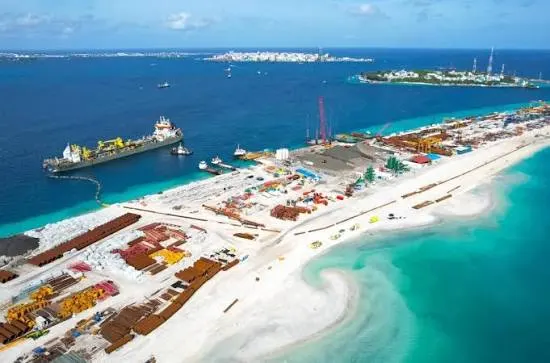
Gulhifalhu is a lagoon and reef area west of Malé and Villimalé. A major reclamation project, carried out by an international dredging contractor, created around 192 hectares of new land, with reclamation reported complete in April 2024. That is a large area for the Maldives, roughly comparable to Hulhumalé Phase 1.
The land is planned for housing, commercial use and supporting facilities. In 2025, around 3,640 housing plots were reported allocated to applicants, and Gulhifalhu was included again as a location in the 2026 national housing scheme. Infrastructure such as roads, utilities, schools and transport will take years to complete.
The environmental cost
Reclamation came at a price. Dive sites and reef areas in the Gulhifalhu lagoon, including the well-known Kiki Reef, were lost or heavily affected, which drew criticism from environmental groups. Buyers who care about the environment may want to understand the project's impact and mitigation.
Thilafushi: from rubbish island to port
Thilafushi was created as a landfill and became the main industrial island for the capital, with warehouses, boatyards and waste management. The government plans to move Malé's congested commercial port to a new port at Thilafushi, using land reclaimed next to the island, reported at around 60 hectares. Construction has been under way.
Moving the port out of Malé has several effects:
- Frees up Malé's waterfront, which could be redeveloped for public space, commercial uses or housing.
- Shifts logistics jobs and businesses towards Thilafushi and Gulhifalhu.
- Increases demand for warehouses, offices and staff housing near the new port.
The Thilamalé Bridge
The Thilamalé Bridge is planned to connect Malé with Villimalé, Gulhifalhu and Thilafushi, much as the Sinamalé Bridge connected Malé with Hulhulé and Hulhumalé. It was reported at about 76% complete in July 2026, and completion, originally due in September 2026, is now expected in 2027. When it opens, people will be able to travel between these islands by road, which would transform access. For homes on the western islands, that is the single biggest factor for future value.
Villimalé residents in particular should watch this. See living in Villimalé.
What it means for homebuyers
More homes, more choice
Thousands of new plots and homes in Gulhifalhu, plus social housing in Hulhumalé Phase 2 and Rasmalé, mean much more supply over the coming years. For families, that is good news: more choice, potentially easing pressure on rents. Read Hiyaa flats explained and Ras Malé housing applications.
Building on a plot takes time and money
If you have been allocated a plot, you will need to design, get approvals and build, which can take years and cost millions of rufiyaa for a multi-storey building. Many plot holders partner with developers or build in stages. Banks may finance construction for approved plans; see BML vs MIB vs HDFC and using your pension.
Early years can be inconvenient
New islands start with limited shops, schools and transport. Early residents may face construction noise, dust and long journeys until the area matures, as early Hulhumalé residents did.
What it means for investors
 For sale nowMVR 7.17MBlue Lagoon 3 BHK Apartment · Hulhumalé
Buying plots from allottees
Some plot holders will want to sell. Before buying a scheme plot from someone else, check carefully:
- Whether resale is allowed, and after how long.
- Whether the buyer must meet eligibility rules.
- That the allotment is valid, registered and free of disputes.
- What fees and approvals are needed for transfer.
Paying for an allocation that cannot legally be transferred is a serious risk. Read property scam warning signs and property transfer and registration.
Effect on existing prices
New supply can slow price growth for ordinary flats in the greater Malé area, especially older ones. On the other hand, better infrastructure tends to lift values close to new links. Well-located, good-quality buildings near the bridge, new transport and services are likely to hold value best. See price per square foot for current benchmarks.
Commercial opportunities
The new port will need warehouses, workshops, offices, staff housing and services. Businesses in logistics, construction and marine services may benefit from being early. See office space for rent for what to check in commercial leases.
Malé's waterfront
When the port moves, the land it occupied in Malé could be redeveloped. Plans have not always been fixed, but any redevelopment of central waterfront land would be significant for nearby property values in Malé.
Building on a Gulhifalhu plot: a rough budget
Plot holders often ask what it costs to build. Costs vary widely with design, number of floors and finishes, and construction prices in the Maldives have risen as most materials are imported. As a planning approach:
- Design and approvals: architect, structural engineer and permit fees.
- Foundations: reclaimed land may need careful soil investigation and piling, which adds cost.
- Structure and finishes: the largest part, usually priced per square foot of built area.
- Utilities: connections for electricity, water and sewerage.
- Contingency: 10–15% for price rises and surprises.
Get several quotes from licensed contractors, insist on a written contract with stage payments linked to progress, and keep part of the payment until defects are fixed. Many families build ground and first floors first, then add flats to rent later, using the rental income to pay down the loan. See rental yields for what letting can earn.
Timeline uncertainty
Large projects in the Maldives depend on financing, contractors, imported materials and politics. Dates are often delayed and plans revised. Before buying anything that depends on a future bridge, port or road, ask:
- Is the project funded and under construction, or only planned?
- What is the official completion date, and has it changed?
- Would the purchase still make sense if the project were delayed by several years?
Comparing with Hulhumalé's story
Hulhumalé offers a useful precedent. Early residents moved into a quiet, half-built island with few services. Over two decades it became one of the most popular places to live in the country, and property values followed. But growth was not straight-line, and it took the Sinamalé Bridge and years of investment. Gulhifalhu could follow a similar path, but buyers should plan for a long horizon. Read Hulhumalé Phase 1 vs Phase 2 for how that market looks today.
What to do now
- Follow official updates from the Ministry of Housing, HDC and the government on allocations, infrastructure and timelines.
- If you hold a plot, start planning your design, budget and financing early, and read the allocation conditions.
- If you want to buy, verify everything and get legal advice. Use our land due diligence checklist as a starting point.
- If you own in Villimalé or west Malé, watch the bridge; it may change demand.
- Browse current options on properties for sale and new developments.
Frequently asked questions
What is happening at Gulhifalhu?
Gulhifalhu, a lagoon west of Malé, has been reclaimed to create new land, with reclamation of around 192 hectares reported complete in April 2024. It is planned for housing and other urban uses, and thousands of housing plots have been allocated.
Is the Malé port moving to Thilafushi?
Yes. The government plans to move the main commercial port from Malé to a new port at Thilafushi, with land reclaimed for it. The project has been under construction.
Can I buy a plot in Gulhifalhu?
Plots have been allocated through government housing schemes to eligible applicants. Resale and transfer rules for these plots depend on the scheme conditions, so check with the authorities before buying from an allottee.
How will the Thilamalé Bridge affect property?
By linking Malé with Villimalé, Gulhifalhu and Thilafushi, the bridge is expected to make the western islands far more accessible, which could increase demand for homes and business space there.