Moving to the Maldives for work is exciting, but finding a home in Malé or Hulhumalé can be confusing. Flats are advertised mostly on local sites and social media, landlords expect cash up front, and the rules are different from home. This step-by-step guide takes expatriates from budget to keys, with the documents, costs and checks you need.
Step 1: Check what your employer provides
Before you search, read your contract. Resort and many island jobs include staff accommodation. Some Malé employers provide a flat or a housing allowance; others leave it to you. Ask HR whether they have trusted landlords, whether they will sign the agreement as the company, and whether they can advance part of the deposit. A company tenancy often makes landlords more relaxed about foreign tenants.
Step 2: Set a realistic budget
Rents in the greater Malé area are high compared with salaries, so a clear budget saves disappointment. As a guide for 2026:
| Area | Studio / 1 bed | 2 bedrooms | 3 bedrooms |
|---|---|---|---|
| Malé | MVR 5,000 – 9,000 | MVR 10,000 – 19,000 | MVR 18,000 – 30,000 |
| Hulhumalé | MVR 8,000 – 14,000 | MVR 14,000 – 25,000 | MVR 20,000 – 35,000 |
Add electricity (the biggest variable, driven by air conditioning), water, internet and transport. Up front, plan for roughly three months' rent to cover the deposit, advance rent and first bills. More detail is in rent in Malé by area and rent in Hulhumalé.
Many single expatriates share a 2- or 3-bedroom flat. Agree with flatmates who is on the agreement, how bills are split and what happens if someone leaves.
Step 3: Choose where to live
Malé
The capital is compact and busy. You can walk to most offices, banks and shops, but flats are smaller and buildings older. Good if you work in Malé and want no commute. See our Malé area guide.
Hulhumalé
Linked to Malé by the Sinamalé Bridge and close to the airport. Newer, greener and more spacious, with a long beach and parks. Popular with families and airport or aviation staff. Phase 1 is established; Phase 2 is newer with more high-rise towers. Read Phase 1 vs Phase 2 and the best neighbourhoods for families.
Villimalé
A quiet, leafy island ten minutes by ferry from Malé, with no cars. Some expatriates love the calm; others find the ferry tiring. See living in Villimalé.
Step 4: Prepare your documents
Landlords commonly ask for:
- Passport copy.
- Valid work visa or work permit, or proof it is being processed.
- Employer letter confirming your job and salary, if requested.
- Local phone number, ideally with WhatsApp.
- A Maldivian bank account is useful for paying rent but not always required at first.
Having these ready lets you move quickly when you find the right flat.
Step 5: Search in the right places
- Listing sites: browse flats for rent on Maldives Investments and save a search to get new matches by email.
- Colleagues and community groups: word of mouth is powerful in a small country.
- Agents: some charge a fee; agree it in writing before viewing.
- Social media: useful, but the main source of fake listings.
Start searching about a month before you need to move. Flats in the greater Malé area are rarely advertised far in advance, and good ones go quickly, so a search that starts too early mostly shows homes that will be gone by the time you arrive.
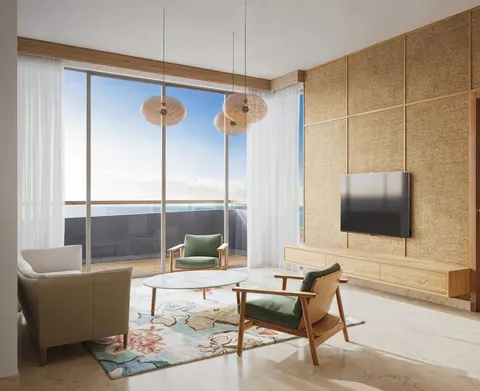 For sale nowMVR 7.17MBlue Lagoon 3 BHK Apartment · Hulhumalé
Step 6: View carefully and verify the landlord
Always view in person, or ask a trusted colleague to view for you. Check water pressure, air conditioners, damp, lift, noise and phone signal. Our viewing checklist lists everything.
Ask to see the owner's ID and proof they own the flat, or written authority from the owner. In 2026 police warned that some social media accounts advertised Hulhumalé flats they did not own, took advance payments, and then reappeared under new names. Never pay before viewing. Read the seven warning signs of a property scam.
Step 7: Agree the terms in writing
Residential lettings are covered by the Residential Tenancies Act (21/2021). Key protections include return of the deposit within 15 days of the tenancy ending and no rent change during an existing agreement. The agreement should cover rent and currency, deposit, advance, bills, repairs, notice and early termination.
As an expatriate, ask for an employment clause: the right to end the tenancy early with one or two months' notice if your job ends or your visa is cancelled. Use our rental agreement checklist to make sure nothing is missed.
Step 8: Pay safely
- Pay by bank transfer to an account in the owner's name where possible.
- Get a signed receipt for any cash.
- If rent is in US dollars, agree the exchange rate for paying in rufiyaa.
Step 9: Move in properly
- Walk through the flat with the landlord and sign an inventory.
- Take date-stamped photos and video of every room.
- Note meter readings.
- Transfer or set up electricity, water and internet as agreed.
- Save the landlord's contact and the building caretaker's number.
Step 10: Living there
Report repairs in writing, pay on time and keep receipts. Respect local customs: Malé is a conservative, mostly Muslim city, so be considerate about noise, dress in shared areas and alcohol, which is not permitted on inhabited islands. Before your agreement ends, ask about renewal early, as the law does not cap rent increases at renewal.
Getting around and everyday costs
Where you live decides how you travel. In Malé most people walk or ride motorbikes, and taxis are cheap for short trips. From Hulhumalé, buses run across the Sinamalé Bridge to Malé, and taxis are widely available; the journey can take longer at peak times. From Villimalé, frequent ferries run to Malé. If your employer is near the airport, Hulhumalé is the obvious choice; if you need to be in ministries or banks every day, Malé saves time.
Food and household goods are largely imported, so supermarket prices can be higher than you are used to. Local cafés and fish are good value. Budget for air conditioning electricity in the hottest months, which runs from roughly March to May.
Families with children
If you have children, look at schools before choosing a flat. Several schools in Malé and Hulhumalé take expatriate children, and international options are limited, so waiting lists can be long. A flat within walking distance of school, a park and the beach makes daily life much easier, which is one reason families favour Hulhumalé. Check that the building has a working lift, safe balconies with railings and window guards.
Common mistakes expats make
- Paying from abroad before arriving. It is tempting to secure a flat before you land, but this is exactly how many people lose money. Book short-term accommodation for the first week or two and view in person.
- Underestimating electricity. A flat with five air conditioners on all evening can add thousands of rufiyaa a month.
- No exit clause. Contracts change and visas can be cancelled. Without an employment clause, you may owe rent for months after you leave.
- Not photographing the flat. Without move-in photos, it is hard to dispute deductions from your deposit.
Can expats buy instead?
Foreigners cannot own freehold land in the Maldives, but leasehold and some approved developments may be open to foreign investors under specific rules. Read leasehold vs ownership in the Maldives before considering it. If you own a property and want to let it, see can foreigners rent out property in the Maldives.
Frequently asked questions
Can foreigners rent property in the Maldives?
Yes. Foreigners cannot own freehold land, but they can rent homes and offices. Landlords usually ask for a passport and a valid work visa.
Where do most expats live in the Maldives?
Most live in Malé or Hulhumalé, close to work. Hulhumalé is popular with families for its space, beach and newer buildings; Malé suits those who want to walk to work.
How much should an expat budget for rent?
A 2-bedroom flat costs roughly MVR 10,000 to 19,000 a month in Malé and MVR 14,000 to 25,000 in Hulhumalé in 2026, plus bills. Sharing a larger flat cuts the cost per person.
Does my employer provide housing?
Many resort jobs include staff accommodation, and some employers in Malé provide housing or an allowance. Check your contract before you start looking.