Maldives branded residences ROI, Maldives villa rental yields, buy resort villa Maldives returns, Maldives real estate yield calculation. When international investors think of luxury real estate yields, cities like Dubai, Miami, and London usually dominate the conversation. However, over the past decade, a quiet asset class in the Indian Ocean has consistently delivered some of the world's highest Average Daily Rates (ADR) and Revenue Per Available Room (RevPAR): Maldives Branded Residences and Resort-Managed Villas.
With global hotel powerhouses—including Mandarin Oriental, Bvlgari, Rosewood, and Capella—expanding their branded residential footprints across private Maldivian islands, high-net-worth investors are asking a straightforward financial question: What kind of actual net rental yields can you achieve, and how do the operational revenue-share models work?
This guide pulls back the curtain on the real financial returns of owning a branded resort villa in the Maldives, outlining gross yield averages, operator split structures, mandatory reserve funds, and realistic cash-flow projections.
1. The Financial Model: How Resort Leaseback Programs Work
Unlike traditional residential real estate where you manage tenants, handle maintenance, or hire a local property manager, Maldivian luxury villas operate under a Mandatory Leaseback Agreement.
When you buy a villa within an integrated luxury resort, you acquire an individual title registered under the Ministry of Tourism. You then sign an operational management agreement with the resort brand.
The Standard Revenue Split
Most major operators utilize a Gross Revenue Share model rather than a net profit model. This protects the investor from bloated operating expenses that can erode profitability.
50/50 Gross Revenue Split: The most common structure across 5-star and 5-star deluxe properties. The resort takes 50% of room revenue to cover resort marketing, staffing, utilities, and operations, while 50% goes directly to the villa owner.
60/40 Split (Owner-Favorable): Found in select ultra-luxury or private island boutique developments where room rates exceed $2,500/night.
Before committing capital to a leaseback structure, ensure you fully understand your underlying property rights by reviewing our comprehensive guide on understanding the underlying strata title leasehold structure.
2. Realistic Gross vs. Net Rental Yields
To understand your actual bottom-line returns, you must separate Gross Yield from Net Return on Investment (ROI).
In premier Maldivian resort destinations, high occupancy rates paired with exceptional ADR create top-line yield numbers that outperform standard metropolitan residential markets.
Asset CategoryAvg. Daily Rate (ADR)Occupancy RateNet YieldUltra-Luxury Resort$2,500 – $6,000+62% – 72%4.5% – 6.5%5-Star Branded Villa$1,200 – $2,50068% – 78%6.0% – 8.5%Urban High-Rise$150 – $35080% – 90%7.5% – 9.5%
A Worked Financial Example ($2.5 Million Overwater Villa)
Purchase Price: $2,500,000
Average Daily Rate (ADR): $1,800
Annual Occupancy: 70% (255 nights booked per year)
Gross Annual Room Revenue: $459,000
 For sale nowFrom MVR 3.6M1+1 Bedroom Apartments at Bayfancy · Hulhumalé
Deductions Breakdown:
Gross Revenue Split (50% to Operator): -$229,500
Gross Revenue to Owner (50%): $229,500 (9.18% Gross Yield)
FF&E Reserve Fund Contribution (4% of Gross): -$18,360
Annual Property Insurance & Admin Fees: -$7,500
Net Cash Flow to Owner: $203,640
Net ROI: 8.14%
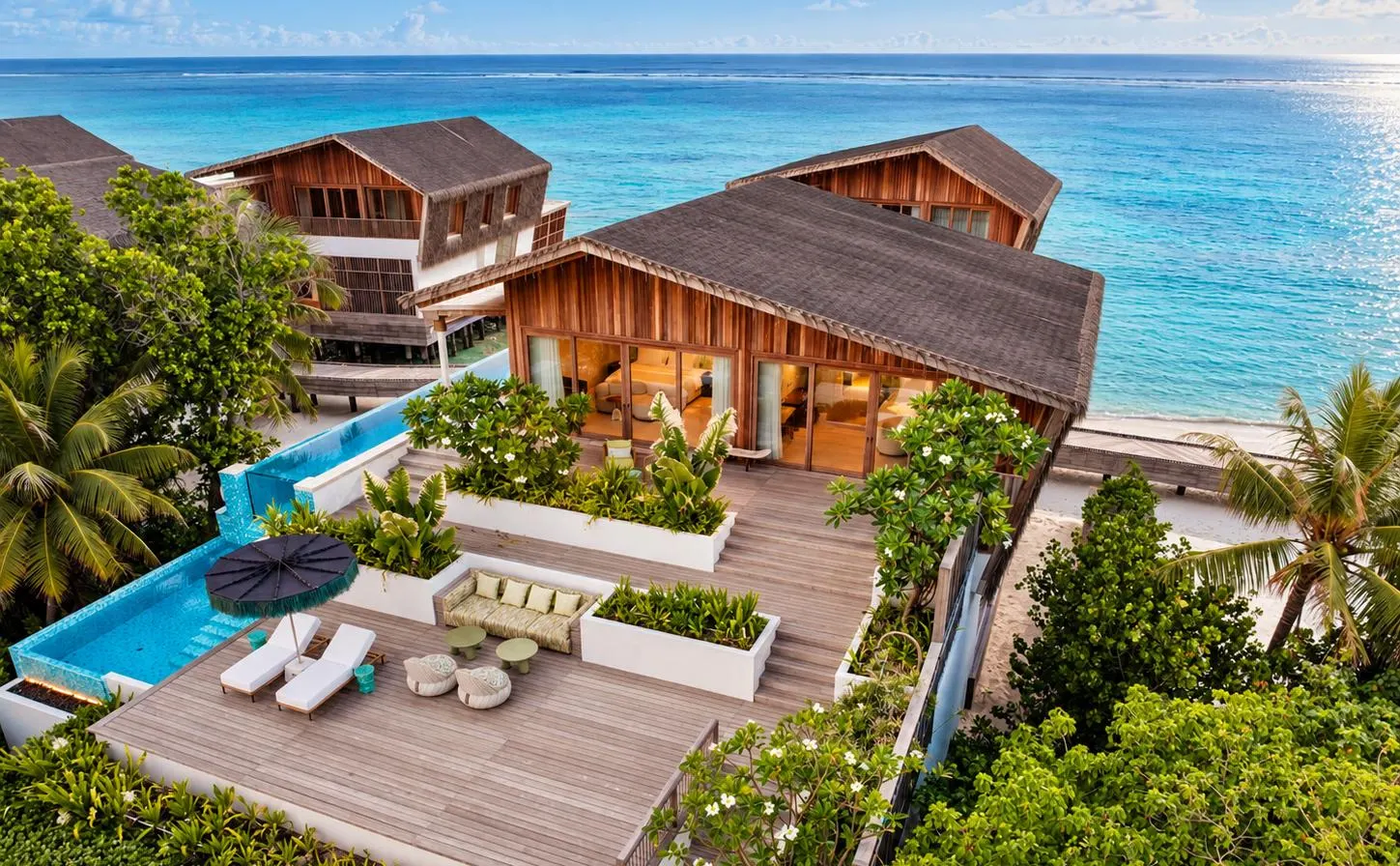
In this scenario, the investor realizes an 8.14% net annual cash return in USD, completely hands-off, while retaining rights for personal holiday usage.
3. The Role of Personal Use Days in Your Overall Returns
One factor unique to resort real estate investments is the Personal Allocation Allowance. When you purchase a resort-managed villa, the contract permits you to occupy your property for a set number of days each year.
Most developers offer owners between 30 to 60 days of free personal usage annually.
Yield Maximization Strategy: Investors prioritizing financial returns typically use their personal days during shoulder seasons (May, September, October) and leave the villa in the pool during high season (December through April).
Lifestyle Valuation: If you utilize 30 days during high season at a villa with an ADR of $2,000, you are consuming $60,000 in "lifestyle value." While this doesn't show up in your bank account, it represents an effective non-cash benefit that adds to your overall investment utility.
4. Key Cost Variables: FF&E Reserve Funds & Service Charges
To avoid surprises on your quarterly earnings statements, every investor must understand two essential expense items in resort contract management:
Furniture, Fixtures & Equipment (FF&E) Reserve: Because Maldivian luxury properties operate in a marine environment with high humidity and saltwater exposure, resorts enforce strict maintenance protocols. Developers set aside an FF&E Reserve Fund (usually 3% to 5% of total gross revenue) to fund periodic refurbishments without requiring out-of-pocket cash calls from the owner.
Service Charges and Common Area Maintenance (CAM): In standard urban developments, CAM fees are paid out-of-pocket every month. In branded resort residences, CAM fees are typically covered directly from the operator’s share of the revenue split. Always verify in your Sale and Purchase Agreement (SPA) whether island utility costs are deducted before or after the gross split.
Investors seeking lower entry points or looking for yield profiles driven by year-round business travel should also explore investing in urban off-plan developments like Ras Malé and Hulhumalé.
5. Capital Appreciation Factors in Island Real Estate
While rental income provides immediate cash returns, long-term wealth building in the Maldives is heavily driven by asset scarcity and land reclamation costs.
Finite Supply: Uninhabited islands suitable for resort conversions within reasonable speedboat or seaplane distances from Velana International Airport are increasingly rare.
High Entry Barriers: Building a 5-star island resort requires $50M to $150M+ in capital expenditure, protecting existing properties from sudden oversupply.
Inflation Protection: Room rates track global inflation dynamically. As resort ADRs increase year-over-year, total gross revenue grows, directly increasing your annual cash payouts and underlying property valuation.
For investors making larger commitments, combining rental yield with legal residency status adds another layer of asset protection. Learn more about applying for the Corporate Resident Visa program.
Conclusion: Balancing Yield and Capital Preservation
Branded residences in the Maldives offer a unique hybrid of strong USD-denominated yield and high-end lifestyle utility. By delivering 6% to 8%+ net annual rental returns alongside 30 to 60 days of luxury island living, resort villas have earned their spot in modern international real estate portfolios.
By evaluating the operator's track record, choosing favorable gross-split models, and selecting prime locations near key transportation hubs, international buyers can lock in consistent cash returns while owning a piece of the world's premier tropical paradise.